Thursday, 20 February 2014

How do film openings attract audiences?

Film openings attract audiences through a variety of audience theories, but the main audience theory which is used in order to attract audiences is the uses and gratifications theory. This theory suggests that the audience has a variety of different needs, and they watch the media product in order to satisfy one of these needs. Because of this, it is opposite to many theories, including the hypodermic needle theory, in that it focuses on how people use the media instead of how the media effects the audience. In order to show the audience that their specific need is going to be satisfied by that media product, the opening of the film should show how their need is going to be met by this film.

For example, in the opening of My Best Friends Wedding, the uses and gratifications theory is used in order to show the audience an idea of relationships which they are unlikely to have experienced, or want to experience, within their real lives. This means that it provides them entertainment, and an escape from their own relationships, which are two of the main reasons for an audience watching a film based on the uses and gratifications theory. Another application of the uses and gratifications theory within film openings can be seen within the opening of The Inbetweeners Movie. It is applied in a slightly different way here, as the film attracts the audience through showing them situations which they are likely to have experienced as a teenager/young adult, which they have probably tried to forget about. This means that the film evokes nostalgia for the audience, which is what encourages them to continue watching the rest of the film.


Another audience theory which can be used in order to attract audiences in a film opening is the hypodermic needle theory. This theory suggests that the audience can be taught to imitate behaviour which they see on the screen. Whilst this won't immediately cause them to be more attracted to the media product, when the people around them notice them copying the behaviour from the media product, they are likely to be intrigued to go and watch it themselves. This theory links to the opening of films because the first five minutes and last five minutes are what sticks in the mind of the audience the most, so if behaviour which is easy to imitate is shown at the beginning of the film, the audience are more likely to find themselves performing these behaviours, which exposes the film to a new audience.

A final audience theory used in film openings in order to attract audiences is the Reception Analysis Theory. This theory suggests that the audience will interpret the message of a film based on their various personal social factors, such as age, gender, ethnicity and social class. It is through this theory that film openings attract a certain audience, for example the opening to Reservoir Dogs immediately attracts a working class male audience between the ages of 16 and 40. It does this by showing characters who are exactly the same as the audience it is targeting, which means that its audience can relate with them much more deeply. This in turn encourages them to watch the rest of the film, as they know that they will be able to relate to the characters throughout it.


Studying the various theories within film openings which attract audiences has shown me how important it is to use a mixture of these theories in order to attract a large as audience as possible to our own opening. Whilst it has been argued that the hypodermic needle theory has become outdated in the modern media world, I still believe that it could be effective within our film, as it will allow the audience to sympathise more deeply with what they are seeing on the screen. 

Wednesday, 19 February 2014

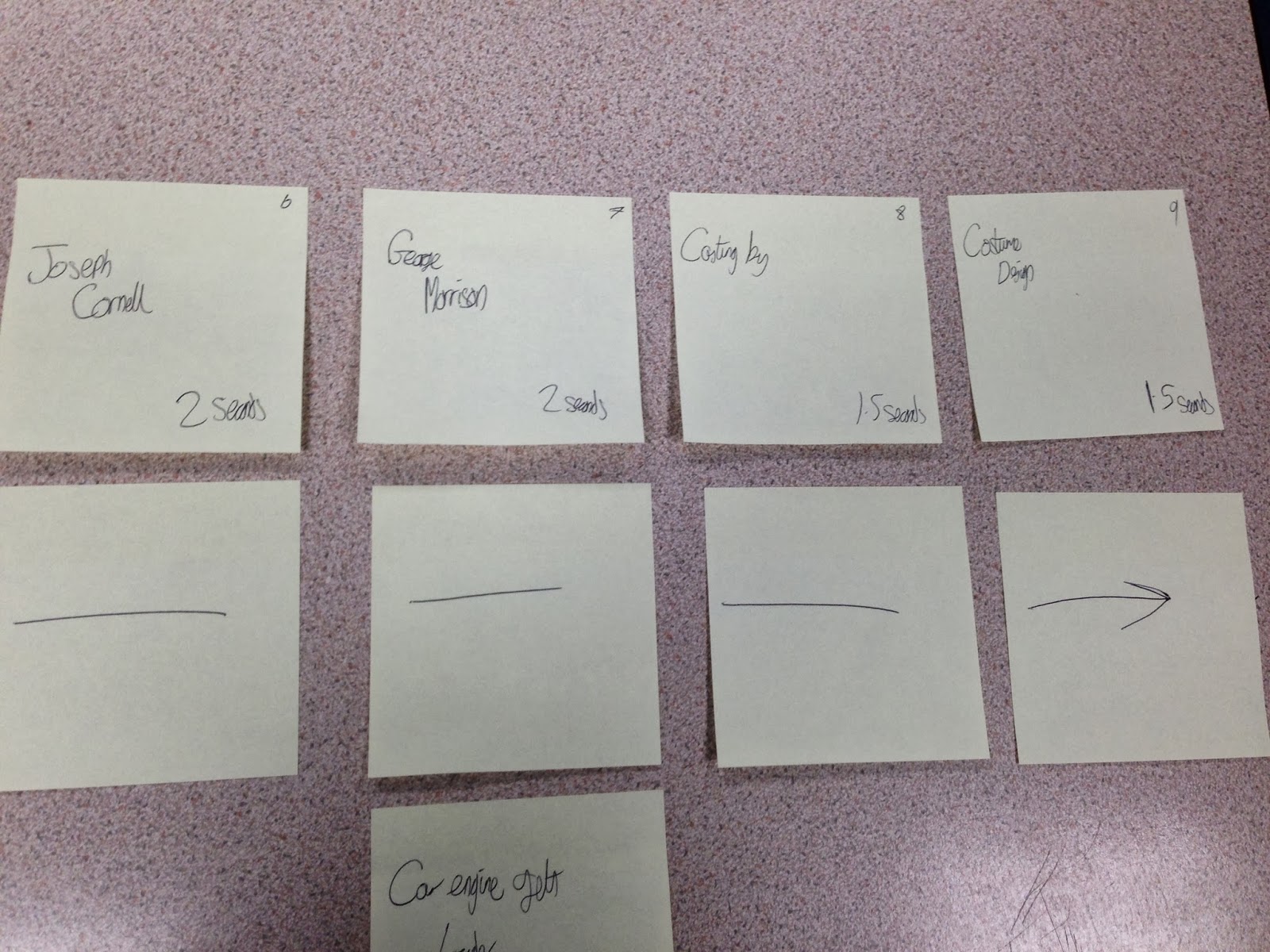
Jelly Babies Activity

In order to learn about the order in which the titles of a film opening should run, we used Jelly Babies to create a template for the opening of a film which we could end up making. The brief for the film which we made was an independent action movie with a young protagonist, which is aimed towards an adult audience. To meet this, there were a few key criteria which we had to follow. One of these criteria was ensuring we didn't include any big name actors, as an independent film company wouldn't usually be able to afford the most famous actors. Additionally, we had to include both visual and audible iconography of the action genre: for us, this was a car chase with two competing alpha male characters and tense fast paced music which was broken up by the increasingly loud sounds of car engines and smashes. This was likely to interest an adult audience through the uses and gratifications theory, which suggests that these audience members would want to see the film because it provides them the entertainment of seeing things which they are very unlikely to have done, or to do, in their lives. 

Whilst we cut out some of the crew titles which would usually be included in the interest of keeping the activity simple, it has taught us the order in which each title should go, from institutional logo right through to the final director credit. 

Doing this activity will greatly help us with the making of our film because it has taught us the importance of getting the titles in the right order. The titles need to run in the same order as the majority of other film openings for our product to seem like it has been produced by a proper media company. 

The photos from the activity can be seen below. 


Tuesday, 18 February 2014

Genre Analysis within Film Openings: Scream

Within film openings, key conventions are pieces of both visual and audible iconography which hint  at which genre the film is to the audience. 

Red is a key convention of horror because it is
the colour of blood, which connotes violence
Throughout the opening of Scream, there are several key conventions of a horror film. At the very beginning, the iconography of the red in the film title is used to connote blood, which is something which is featured in almost all horror films. At the same time, there are a multitude of audio codes being used in order to further connote the genre of horror. The stabbing sound, the emphasised heartbeat and the screaming sound are all key conventions of horror genre, as they all connote violence and fear. 


She appears to be clueless that she is talking to her killer
The first key convention of the horror film which is seen when the film begins is the dumb blonde girl, who is clearly going to be the victim of the film throughout it. However, she is killed within the first ten minutes, which defied the conventions of horror films before it, because these films would often have a protagonist who was troubled until they are eventually killed, or ridded of their demons, by the end.

"I want to know who I'm looking at"
A key convention of horror that runs throughout the opening 5 minutes is the creepy voice of the male character. His voice starts off as being normal, yet becomes progressively creepier throughout the opening, in order to give the viewer a false sense of hope. This voice connotes fear and violence, and the words he is saying match this, as he becomes increasingly more intimidating for the girl, who doesn't know what to do. This signifies that the film is part of the genre of horror because the audience sense the fear of the girl, and this fear then becomes their own, as they fear all of the things that are unknown to them - who is this man, what is he going to do to her and so on. 

An innovative use of the camera in order to tell the audience that the film is part of the genre of horror is the use of a dutch tilt on the camera - this connotes uneasiness and that things aren't quite right, as the audience sees the shots from side on. The camera is also shaky in parts which gives the illusion that the audience are there in the room, seeing it from a shaky perspective. This means that the opening has a high level of verisimilitude, which is a key convention of the genre of horror, because making the audience feel like they are a part of the action makes it much scarier for them, and this is how an audience gains entertainment from a horror movie. 

After the man on the phone says "I want to know who I'm looking at," the non-diegetic music suddenly changes key and becomes quicker, meaning that it sounds more tense. This connotes the fear of the woman, as if she was relaxed then the music would have slowed down in order to show that her emotions have chilled out. Additionally, there is the sound of a dog barking and the high pitched shrill of a crow - both of these noises are uncomfortable to listen to, which is the directors way of using verisimilitude in sound as well as video, as he makes the audience feel uncomfortable and frightened in order to make them feel like they are a part of the film. 

Low key lighting creates lots of shadows - another key
convention of horror.
The lighting which is seen throughout the film opening is fairly low key. This has been done in order to create lots of shadows, which connote mystery and fear, as anything could be "hiding in these shadows". The use of low key lighting in order to create shadows is a key convention of horror, as from the earliest horror films, there would often be the shadows of gravestones created by the moonlight shining on them. However, the film also appears to defy these key conventions of a horror film, as parts of the house are filmed in naturalistic lighting. This naturalistic lighting connotes hope, which gives the audience a false sense of hope that the female character is going to be alright. This had seldom been seen in horror movies before, as the lead character was usually seen as being doomed from the beginning in horror movies before Scream. 

The director seems to be more aware than anybody else about the key conventions of horror movies. This is shown by the self-referential line "come outside to investigate a strange noise". The idea of the victim leaving their house in order to investigate a strange noise is one of the most cliched openings of a horror movie, so by referencing this, the director has shown that he understands the key conventions of a horror movie, even though his film appears to be defying them. 

The music changes throughout the opening, with it gradually building up to the scariest moments, and then dropping back down again. This means that the viewer can predict when the most psychological affecting parts of the film are going to happen, which gives them time to prepare for it. This mental preparation to be scared is what makes the scenes appear even scarier - the audience are subconsciously built up to a crescendo of fear through the use of music, even if they don't realise that they are. 

She is oblivious to the popcorn burning behind her
The most important pieces of iconography within the opening of Scream are the popcorn and the masked killer. The popcorn immediately connotes the watching of a movie, which the female character confirms when she tells her killer that she is "going to watch a scary movie". This is another demonstration of self awareness of the director, as the idea of somebody getting killed whilst preparing to watch a movie about people getting killed is an example of the irony which is a key convention of a self-aware horror movie. Additionally to this, the sound which the popcorn makes connotes the sound of a gunshot, which is a key convention of horror, because it connotes violence and fear. The masked killer is perhaps the most frequently used of all the key conventions in horror - the mask connotes a sense of mystery, fear, violence and audience interaction. The mystery which the mask creates is what makes the violence even scarier for the audience, as they fear even more about why the killer is doing it if they cannot see his face.

To conclude, by studying the opening of Scream, it is clear that it is a film made by people who are completely aware of the generic conventions of horror, yet rather than abiding by all of them, managed to stretch these conventions in order to redefine what is expected of the horror genre almost single handedly. 

Genre Identification Within Film Openings: Kidulthood


Kidulthood is a film which is part of the drama genre, and this is clear from its opening sequence, which contains many key components of the drama genre, with both visual and audible iconography being used in order to demonstrate this. 

The Stealth Films/Cipher Films production logo at the very beginning of the opening sequence tells the audience that the film has been made by a small British independent company, which connotes that the film will probably be part of a hybrid genre which is being aimed at a niche, local audience. The hybrid genre which is being seen in this film appears to be a crime drama, as it is a drama which follows the lives of a group of teenagers who are deeply involved in various gang related crimes.

The first sound which is heard, before the video has even started, is the sound of people screaming and shouting. This immediately makes the audience imagine a school playground, which connotes that the film is going to be set in a school. This hinted school setting means that before the film has even started, the audience know the films genre is going to be based in genre, as films containing teenagers almost always are. This school setting is confirmed to the audience when they see the school uniforms of the students, which confirms that the genre of the film must be a school based drama. The foul language used by the female characters is used as another way of showing that the film is a drama - it gives the film the shock factor which is often desired by people who are wanting to see a drama. Whilst a drama has to be realistic in terms of setting, the more ridiculous it is, the more entertaining it is for the audience.

The lighting which is used in the film opening is mainly naturalistic - this connotes that the film is a drama because it appears to be a realistic representation of a place. If the lighting was too dark or too light then the film would not appear to be realistic, so would be harder to place into the genre category of a drama. However, in the room where the drill is being operated, the lighting is of a more low key nature, which connotes that it is a serious drama rather than a light hearted one as it creates a sense of mystery about what the character is doing with the drill. 

Along with the naturalistic lighting of the opening clip, there is also a naturalistic setting. A school playground is a setting which could be found anywhere, so the audience are guaranteed to relate to this aspect of the film, even if they cannot relate to the activities which the characters are doing. This is a key convention of the drama genre, as the setting is relatable for the majority of the audience in order to draw them in, and then the entertainment comes from showing them things which they are unlikely to have ever experienced. The general setting of the film, which is somewhere in North East London, is established by the idiolect of a variety of the characters, with a heavy amount of slang mixing with a variety of different cockney accents. Whilst there is no specific location set for the drama in the introduction, the setting is established 

The costumes of the characters is hugely significant piece of towards showing that this film is a part of the genre of drama. The gold hoop earrings worn by one of the female characters are a piece of key iconography - they connote that she is from a working class background, and that she comes from a society where wealth is a important indication of status. By showing that she is wearing gold, even if it is faux, it connotes her wealth and seeming overarching social status over other girls.

The handheld camera which films most of the scene gives the film a naturalistic drama feel, meaning that there are high levels of verisimilitude. The shakiness also connotes the instability of being a teenager going to a school like this, and teenage angst is a key convention of the genre of drama. 

The opening immediately establishes a society which is patriarchal, which is shown by the frequent clips of the male characters playing football with the female characters watching from the sidelines. This male dominated environment gives the representation of women that they are weaker and unimportant in a society such as this. The gender divide is a crucial key convention of the genre of drama, so this is another part of the opening which connotes to the viewer that the film is going to be a drama.

Another key convention of drama which is shown in the opening of the film is teenagers trying to act like they are older than they are. This is shown by the frequent references to underage drinking, promiscuity and drug use, despite the majority of the characters being no older than 16, which we know due to the school uniforms which they are wearing. All of these key conventions, which are seen multiple times within the opening, show that the teenagers believe their school is a lawless society, and this sort of society, where people can get away with what they want, is often seen in the genre of drama. Additionally to this, the criminal activities which the teenagers are partaking in, or talking about, suggest that this film may be a crime drama. This does transpire to be true, as the crimes they are committing get continually worse as the film progresses. The idea of teenagers doing things which most adults wouldn't ever dare to is what makes the entertainment in a drama - the key convention of teenagers acting older than they are brings entertainment to the audience as they can look down on them.

There are many conventional characters of a drama piece visible in this opening. The majority of the characters would be stereotyped as chavs due to their sense of dress and idiolect. This then invites contrast from the characters who are not dressed in the way that they are, and the conflict between two separate social groups is a key convention of drama movies and TV shows.

Finally, there are a few different parts of iconography which have not been touched upon yet. The joint which one character lights and begins smoking says a lot about them, and the genre. It connotes that they have no regard for any laws (openly consuming drugs inside a school) and that they are trying to act up to an image in order to gain respect from those around them. The haircuts of the female characters appear to be more masculine in style - this again represents the society of the film as being a patriarchal one, where girls have to act the same as the men around them in order to be respected. The one girl who has a traditionally feminine style of hair is abused by the rest of the girls throughout the opening. This clash between the majority and minority is a key convention of the drama genre, because drama is a genre which relies on the differences and disagreements of people in order to be entertaining.

Studying the opening of Kidulthood will help when making my film opening because it has shown to be how important uses of iconography for representation are, especially for representing the genre in a clear way.  

Monday, 17 February 2014

Classification and Certification of films


Classification is the term used to describe putting films into certain categories in order to restrict access to the material on grounds of age. The five categories which are common in UK cinema are U, PG, 12A, 15 and 18, with specially licensed cinemas being allowed to show R18 movies. 

There are a myriad of reasons as to why films are classified. It protects vulnerable children from accessing content which could potentially cause them harm. There is also a legal obligation for films to be classified, as it is against the law for people under a certain age to view certain things in a film. Finally, films have to be classified properly for societal reasons which consider broader public opinion, especially in regards to language. If a film uses controversial amounts of bad language and people complain that it has been given an unsuitable rating, then the public exhibition of the film can be limited, or even stopped.

All films which are shown in Britain are classified by the British Board of Film Classification, or BBFC. It is a self-regulated body which is made up of film industry representatives. In order to classify films, people from the board liaise with the public to decide on film ratings. However, despite the board giving each film a rating, it is the local councils who decide on the final certificate to give to a film. This system has caused controversy in the past, with Mrs Doubtfire (1993) being rated a PG by many councils, despite some thinking that the film was unsuitable for children under the age of 12 due to the bad language used.

It isn't just films in the cinema which have to be classified by the BBFC - all DVDs and videos for home use have to be classified in the same way. Many DVDs have the same rating as they did in the cinema, but some films release censored versions in order to allow a wider range of people to buy the DVD when it is release. This also means that straight-to-DVD releases have to be classified, as their content must also be restricted for the same reasons. This law came into place as part of there 1984 Video Recordings Act.

On the 24th of February 2014, the BBFC certification guidelines are changing slightly, in order to keep up to date with public opinion. The main change will be else tolerance of bad language at a U level, but allowing more bad language in a 15 before it is pushed to an 18, as rating a film as 18 cuts out a key share of the target audience of most films. 

The most controversially rated film of the past 5 years was 'Woman in Black', which many viewers thought contained scenes too distressing for children as young as 12 to be watching unaccompanied. However, on a later survey, it transpired than only 11% of viewers thought that the film should have been re-rated as a 15, with 89% voting that it should remain rated as a 12. 

Sunday, 16 February 2014

Certification of our Film

I believe that our film will be certified as a 15. The BFI say that a 15 rated film can contain:

  •  strong violence
  •  frequent strong language (e.g. 'f***').
  •  portrayals of sexual activity
  •  strong verbal references to sex
  •  sexual nudity
  •  brief scenes of sexual violence or verbal references to sexual violence
  •  discriminatory language or behaviour
  •  drug taking

All of this suggests that our film will be suitable to be classified as a 15. In terms of violence, we will only feature it in flashbacks to show the tough life that the protagonist used to lead, and even then, it is going to be inferred more than shown. This means that it will probably contain violence which is suitable for a 12A, as violence is not something which we plan is going to be a very large aspect of our drama film.

It is likely that we will use frequent strong language within our film, in order to present a setting which is as realistic for the audience as possible. Whilst we could cut out some of this language in order to allow our film to be watched by a larger audience, we believe that in the artistic interest of our film it would be best if we included strong language where it needs to be included, without pushing the boundary out too far.

The portrayals of sexual activity in our film are going to be minimal or non-existant, because this is a coming of age story which strays away from the sexualised story of being a teenager that most films tell. Instead, ours is a story of leaving childhood behind in different ways, so any portrays of sexual activity are likely to be very light ones.

There is likely to be some nudity within our feature length film, as we will have to give a portrait of how society believes teenagers live, which may include having to include nudity in our piece, be it in a sexual or a non-sexual way. However, we are unlikely to use it in a way which is overtly sexual, because as I mentioned before, our film is trying to stray away from the sexual promiscuity which seems to dominate the coming of age genre.

In terms of sexual violence, our film may include some shots which suggest that the protagonist had to experience sexual violence as a child, which means that the film would have to be classified as a 15. However, the film also shows the emotional distress which is caused by this type of violence, which is what will stop the film from being an 18, as it shows why such an act is wrong. 

Our film is likely to include some discriminatory language, as it will help the audience to reflect on the troubled childhood which has been experienced by the protagonist, as this is what would have made them wary to others. However, our film will never encourage this sort of language as being acceptable, and will always portray the protagonist as being a villain rather than a hero at any point when they are being discriminatory.

Finally, our film is likely to include some minor drug taking. Whilst it is not going to be anything heavy, it will show that drug taking is a fundamental part of most people's idea of 'coming of age'. Because of this, I believe that it is essential to include drug taking in some form in order to stay true to the roots of our genre, although we will probably paint it in a negative light in order to ensure that the film does not get bad press because of it.

Thinking about the certification which our film should be has made me consider the possibilities of changing elements of it in order to reach a lower certification, although I believe our film would lose some of its stylistic integretity if we had to cut it in order to make it into a 12A. 


Saturday, 15 February 2014

Timelines of Film Titles: The Social Network


The Social Network (2010) has an unusual opening sequence, in that it doesn't start until almost 6 minutes after the film has begun, with the first scene of the film containing no titles other than the Columbia title card at the very beginning. In terms of title order, the opening is very similar to that of 8 Mile: the production titles (production company, director ect) are the first ones seen, then the actors, with the star actor first and then the supporting cast afterwards, and then finally the crew, who's roles are listed in the reverse order to this. 

By noticing this similarity between the opening sequences of both films, I know that the film I produce will have to follow this same order, as it is a similar genre to these films, both of which are biopics. Additionally, studying the two title sequences has given me ideas about the amount of sound which is necessary to use: 8 Mile uses a fair amount of dialogue, whereas the only diegetic sound in The Social Network is footsteps and distant, almost inaudible chattering in the background. 

A difference between the two opening sequences is the length, with the opening sequence of 8 Mile being almost 2 minutes longer than The Social Network. For our film, I would rather make an opening sequence which is sub 2 minutes, as I feel all of the titles work better if there is a smaller gap between them. Additionally, we are unlikely to have much action in our film before the titles begin (unlike The Social Network), because 

Below is a timeline of titles in the opening sequence of The Social Network.